

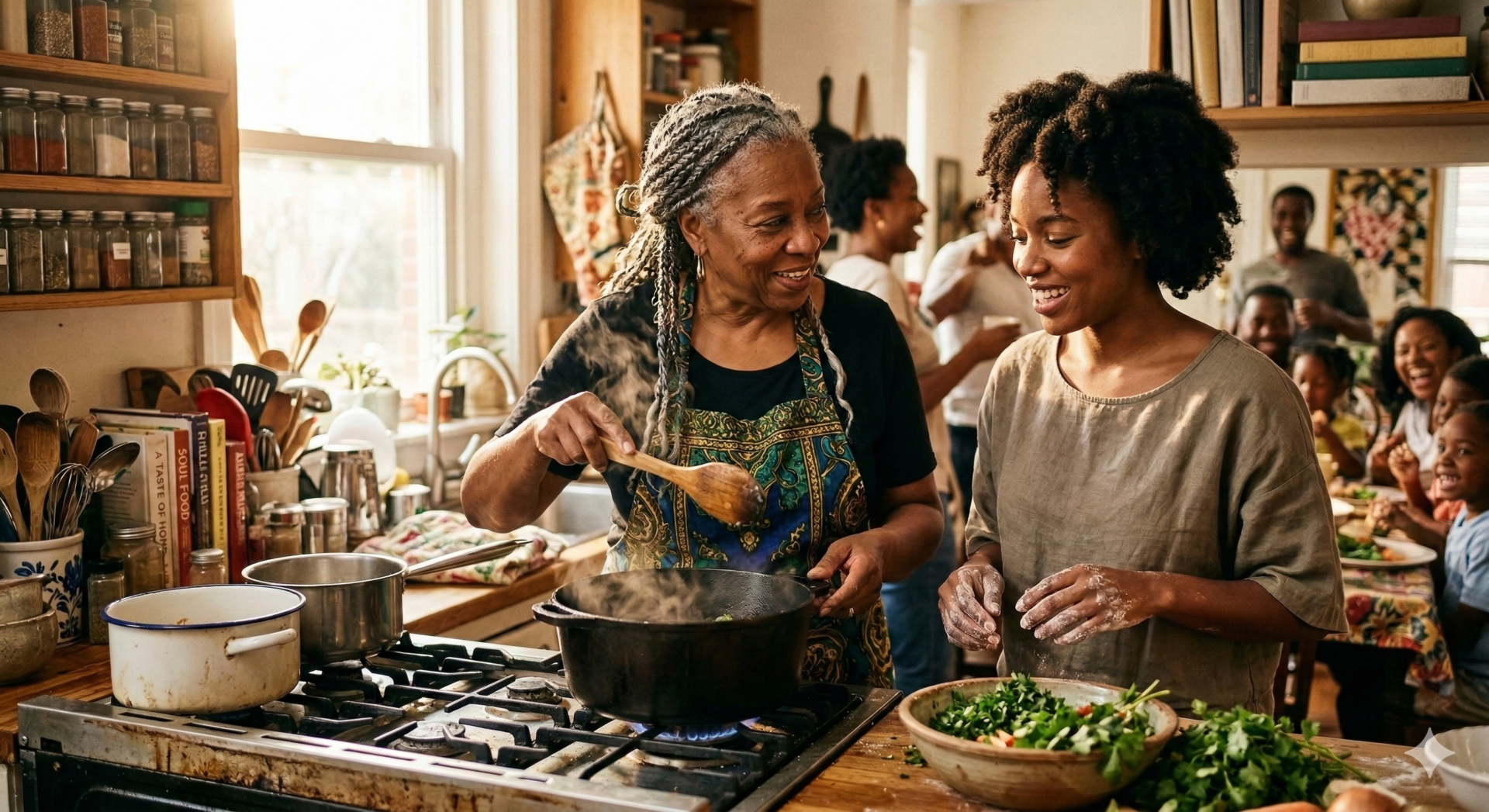
Have you ever walked into your grandmother’s kitchen and been instantly transported? It’s not just the aroma of slow-cooked pot likker, or the precise sweetness of a sweet potato pie filling that got you. It’s the history. It’s a little bit of Heaven on Earth. You are breathing in generations of resilience, love, and a quiet, powerful defiance against erasure. Tradition that is passed down from kitchen to kitchen. The problem is, we often treat these recipes like simple comfort food, missing the profound engineering and cultural strategic planning that went into every pot.
We are losing the people who held these stories first, and when they go, the recipe—the actual recipe, the one with the ‘measure with your heart’ wisdom—is often lost too. This isn’t just about recreating a flavor profile; it’s about preserving our intellectual property and our spiritual technology. If we don’t treat these culinary secrets with the same reverence we give our business strategies or our classic albums, we are actively letting our own history evaporate.
But there is a way forward, and it’s simpler than we think. We have to start seeing our inherited recipes as the ancestral wisdom and the genuine wealth they are. This article is your guide on how to tap into that lineage, preserve the real stories baked into every dish, and understand that in the Black community, the kitchen table has always been our boardroom.
Culture, business, and everything in between — delivered straight to you. Join the BFA Collective Newsletter.
Beyond the Plate: Food as Resistance and Resourcefulness
When we look at our culinary history, it’s easy to focus on the ingenuity of survival. But that’s only half the story. Yes, our ancestors took the scraps they were given during enslavement and turned them into culinary masterpieces, showing a level of chemical understanding and resourcefulness that is frankly staggering. To properly process field peas to make them nutritious and flavorful took serious agricultural and biological knowledge. They knew exactly how much ash to add to corn to nixtamalize it and unlock the niacin, preventing pellagra. That’s not ‘making do.’ That’s food science.
This innovation didn’t stop. Fast forward to the early 1900s, where street vendors in cities like New Orleans were building entire economic ecosystems around selling things like calas (fried rice fritters) and pralines, using skills carried directly from West Africa. They were translating that ancestral food knowledge into financial freedom, a blueprint that is as relevant today as it was then. When we recreate these dishes, we aren’t just eating. We are engaging with a legacy of brilliant strategic thinking.
The Recipe as a Strategic Blueprint
Ask any seasoned Black cook how they make their signature dish, and you’re unlikely to get a list of measurements. You’ll get a series of sensory cues: “until the roux is the color of a copper penny,” or “when the chicken starts to sing.” This isn’t a lack of precision; it’s a different kind of precision. It’s an oral engineering manual based on experience and intuition, designed to be passed down through shared work and watching, not just reading a page.
This transfer of knowledge is our intellectual property. Every variation of a red drink (from West African bissap to southern hibiscus punch) is a cultural algorithm, honed over centuries. In a very real sense, these family secrets are our patents. They represent distinct, protected formulas that define who we are. Treating them as such means we approach the ‘measurements’ (or lack thereof) with the understanding that we are learning a complex, valuable system, not just a set of instructions.
Preserving the Scent and the Story
The true value of the recipe isn’t just the final flavor; it’s the stories baked into the process. We have to become the archivists of our own kitchens. The next time you’re with a family elder while they are cooking, don’t just write down “add seasoning.” Watch how they add it. Ask where they learned that technique, and who taught them. Was it a necessity during the Great Migration, when access to familiar ingredients was limited, or was it a style specific to their hometown?
This documentation is vital. The narrative is the recipe. The real ancestral wisdom isn’t just knowing to put a smoked turkey neck in the greens; it’s knowing the memory of the person who first did it to feed a whole family with flavor when funds were tight. Capture those stories. Use your phone to record the conversation. This isn’t homework; it’s legacy preservation.
Tapping Into the Source: How to Modernize the Legacy
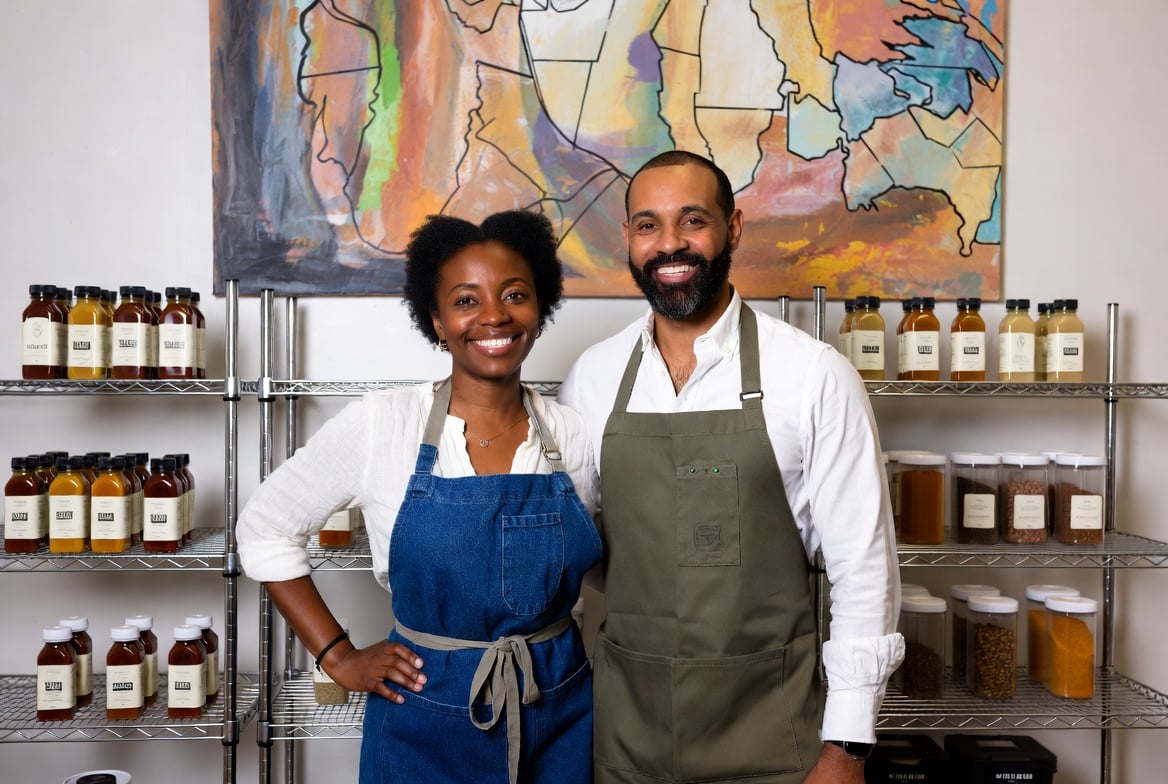
So, what do we do with this wealth? We build on it. The same ingenuity that allowed our ancestors to transform humble ingredients can fuel our innovation today. Look at what creatives and entrepreneurs are doing now. They are launching small-batch hot sauce lines inspired by a grandfather’s recipe, or using the business principles of those early Creole vendors to build digital-first food communities.
They are understanding that our food ways are not stagnant artifacts; they are dynamic frameworks for creativity and commerce. The “ancestral” part isn’t about being stuck in the past; it’s about using that deep, culturally specific foundation to build products, brands, and spaces that feel authentic and true because they are.
What Is Soul Food vs. Black Cuisine?
The distinction is subtle but important. Soul Food is a specific subset of Black cuisine that originated in the American South, heavily influenced by West African traditions and the survival strategies of enslaved people. It features dishes like collard greens, fried chicken, and cornbread. Black cuisine, however, is a much broader, global umbrella that includes food from the entire African Diaspora—the Caribbean, Latin America, Europe, and throughout Africa itself. Understanding this difference is key to appreciating the full depth and diversity of our food history.
Why Are Family Recipes Important for Black Culture?
Our family recipes are one of the most consistent and powerful tools we have for cultural continuity. Throughout history, when other parts of our heritage were systematically stripped away, the recipes—the flavors, techniques, and shared meals—endured. They are a tangible link to our past, carrying the stories of who we were and how we survived. Preserving them isn’t an exercise in nostalgia; it’s a vital act of self-definition and cultural ownership.
How Can I Convert “Measure with Your Heart” to a Written Recipe?
The trick to standardizing a “measure with your heart” recipe is to be a keen observer. The next time the cook makes it, don’t step in. Instead, have them measure each ingredient they use into the bowl, but ask them to pause for a second first. You can use a standard set of measuring cups and spoons to scoop what they have ‘intuited’ into a standard measurement and record it. For things like the “pinch of this” or “dash of that,” have them do it first into your hand or onto a specific spoon to get a visual reference. This collaborative process respects the intuitive style while creating a replicable blueprint for the future.
Where Do I Start If I Don’t Know Any Family Recipes?
You can still tap into that energy. Start by talking to any relatives you are in touch with, even distant ones. Food is often a bridge to memory, so asking “What did your mom cook for birthdays?” can unlock stories. If that’s not an option, immerse yourself in the canonical texts of Black food history—like the work of Jessica B. Harris, Vertamae Smart-Grosvenor, or Edna Lewis. See what resonates, and begin experimenting and building your own culinary traditions, drawing from the wider diaspora. You can create the legacy that you want to pass on.
The final plating is about more than just a meal. When we understand and honour the ancestral wisdom hidden in our family recipes, we are doing more than just cooking. We are activating a lineage, protecting our unique cultural assets, and recognizing that our recipes are a form of true wealth that no one can take from us. Our kitchens have always been sites of innovation, resilience, and quiet power. Let’s make sure we keep the fires burning.
Don’t miss the next deep dive. Join the BFA Collective today.
Reader’s Favorites:
- Empire-Building From Zero: The Resilience of the Self-Made Black Founder
- How to Fix Prickly Body Hair Without Expensive Laser Clinics
- Beyond the Talk: Nurturing Conscious Kids in an Unfiltered World
- The Black Laugh Is Not Just Funny; It Is Our Fortress
- More Than Just Brunch: Why Reclaiming Our “Third Place” is the Next Wellness Revolution