

Let’s be honest. We all know “The Talk.” I had it, you have probably had it too. It’s that rite of passage in Black households, the essential, heartbreaking, and necessary conversation about navigating a world that often sees our children as threats before it sees them as children. The conditions of America often times rob the youth of their childhood innocence. Historically, that conversation was fueled by one primary goal: survival.
But times are changing, and so are we. While that survival conversation remains critically important, it’s no longer the only conversation. Today, culturally aware and ambitious Black parents are demanding more. We are moving beyond teaching our kids how to survive racism toward a new paradigm: teaching them to understand race, claim their identity, and thrive without internalizing the fear that has long shadowed these discussions.
The problem isn’t the topic. The problem is the anxiety surrounding it. We worry about when to start, what language to use, and how to balance maintaining their beautiful, innocent childhood while preparing them for systemic realities that don’t care about innocence. We wonder if we will say the wrong thing, or worse, if our silence will leave them ill-equipped. Agitating this anxiety is a constant media cycle and personal experiences that remind us the stakes are high.
That tension is real, but it doesn’t have to dominate your parenting style. It is possible to talk to your children about race in a way that is empowering rather than traumatizing. It is possible to dismantle the fear and replace it with historical context, cultural pride, and critical thinking. This isn’t just about having one difficult conversation; it is about building an ongoing framework for conscious living. This article is your guide to doing exactly that.
Culture, business, and everything in between — delivered straight to you. Join the BFA Collective Newsletter.
Move From Intervention to Integration
For too long, the approach to discussing race has been reactive. We wait for a police-involved shooting to dominate the news cycle, or for our child to experience their first overt incident of bias on the playground, before we initiate the dialogue. This approach frames the conversation around trauma and deficit. We must shift from intervention to integration.
Talking about race should be as natural as talking about kindness, math, or money. It is not one high-stakes conversation; it is hundreds of small, age-appropriate interactions that happen over a lifetime. It starts far earlier than most parents realize. Children are not colorblind. Research indicates that infants as young as six months old notice skin color differences. By three years old, they can begin to internalize societal biases about those differences.
We miss a massive window of opportunity by waiting until they are ten or twelve. Integrating these concepts early means normalizing difference before society can weaponize it. This looks like pointing out the beauty in all skin tones in the same way you celebrate different eye colors. It looks like celebrating Black history (and not just slavery or the Civil Rights Movement) as integral to the human story, not as a specialized footnote.
Leverage the Silent Curriculum
We often think the conversation only counts when we are actively speaking, but the most powerful conversations are the ones your children are having with their environment every day. This is the silent curriculum. It’s what your home is saying about Blackness, identity, and value when you aren’t saying a word.
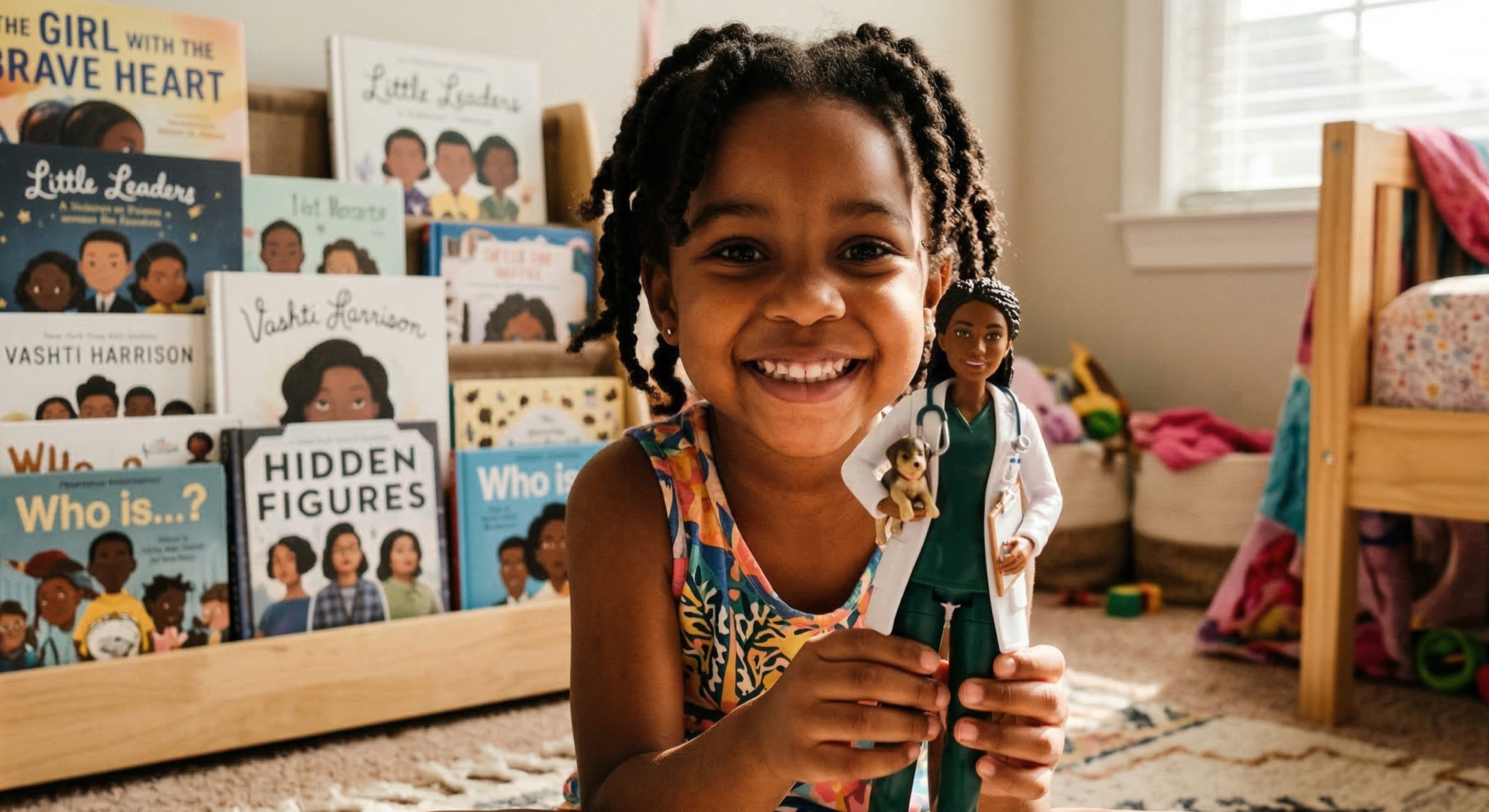
Look around your living room and your child’s bedroom. Are the images on your walls reflective of the expansive Black experience? Are the faces they see in their books, their action figures, and their puzzles affirming their own? It matters. If the only time they see people who look like them is in the context of struggle, that sends a silent message.
Ambition demands that we model possibility. This means curating an environment rich with depictions of Black joy, innovation, and leadership. Introduce them to figures like Dr. Mae Jemison, the first Black woman in space in 1992, or Lonnie Johnson, the engineer who invented the Super Soaker, as household names. The goal is to build a foundation of cultural competence and confidence so strong that external bias cannot easily dismantle it.
The Age-Appropriate Framework
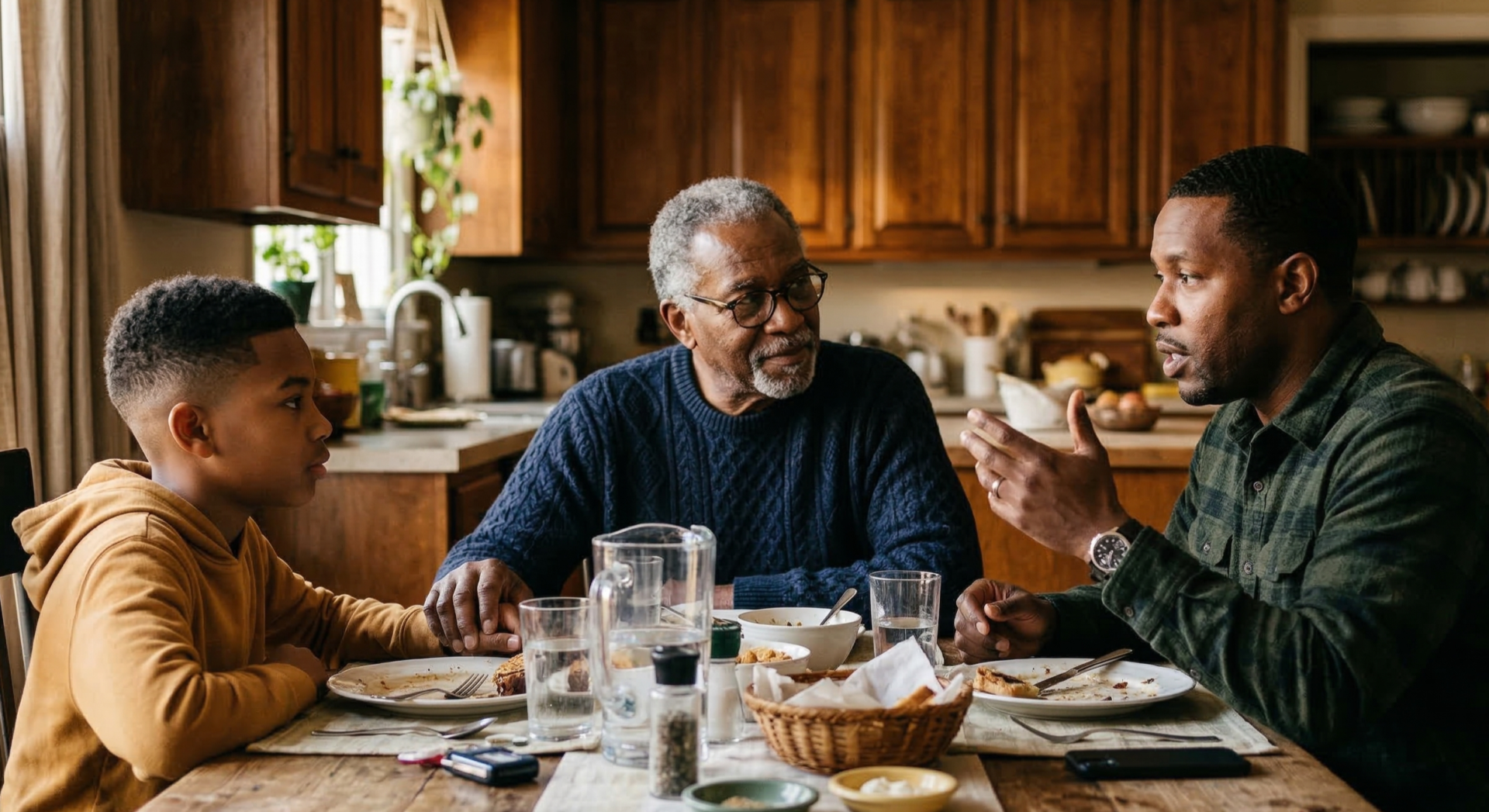
Fear often stems from not knowing what to say at a given stage. We worry about overwhelming them. The solution is to match the complexity of the topic to their developmental stage. We are not hiding the truth; we are scaffolding their understanding.
For toddlers and preschoolers (ages 2 to 5), the focus should be on identity, fairness, and appreciation. Language should be concrete. Explain that people come in many beautiful shades, and skin color is caused by melanin, which is like a natural sunscreen. Connect race to the concept of fairness, which is a value this age group intimately understands.
For elementary-aged children (ages 6 to 10), you can begin to introduce systemic concepts. This is the age to talk about rules and systems. You can explain that sometimes the rules in our country haven’t been fair to Black people, and that history is full of people (both Black and non-Black allies) who worked to change those rules. Concrete historical examples, like the landmark 1954 Brown v. Board of Education decision, help to ground these concepts in reality rather than abstract fear.
For middle schoolers and teens (ages 11 and up), the conversation deepens. This is the age to discuss media literacy, systemic racism, intersectionality, and allyship. They are ready to process the nuance, the historical continuity of systems, and, yes, the realities of police interactions. This is where “The Talk” integrates with “The History,” allowing them to see themselves not as victims, but as part of a legacy of resilience and resistance.
Navigate Trauma Without Absorbing It
Let’s address the anxiety directly. The hardest part of this entire process is managing our own reactions to racial trauma while trying to guide our kids. When we see headlines about violence or injustice, our natural instinct is either to over-explain (fueled by anxiety) or to shut down (fueled by self-preservation). Neither approach serves the child.
You must secure your own mask first. Process your grief and anger with other adults, not with your children. When you discuss difficult current events with them, lead with information, not just emotion. It is okay to say, “I am sad and angry about this,” but follow it up with action and context. Focus on the helpers. Focus on the activism. Focus on what we, as a family and a community, are doing to create change.
We cannot protect them from knowing that these things happen, but we absolutely can protect them from feeling helpless about it. The goal is conscious resilience, not fear.
Joy as Resistance
Perhaps the most critical, and overlooked, part of talking to our kids about race without fear is centering Black joy. If our conversations are only about oppression, bias, and the struggle, we are failing to give them the full picture of their heritage.
We must speak about Black innovation, Black style, Black family, and Black laughter with the same frequency and intensity that we speak about the challenges we face. We must connect them to the 400-plus years of cultural production that has shaped global culture. Let them know that they come from a lineage of people who knew how to thrive, create, and find joy even in the wilderness.
Our children’s confidence is a direct reflection of our own. When we approach these conversations with clarity instead of dread, we arm them with a superpower: a grounded, joyful, and unbreakable sense of self.
When is the right time to start talking to my child about race?
The right time is now. Research shows that children begin to internalize racial biases as early as preschool. Start by integrating diverse books and toys into their environment and using age-appropriate language to normalize and celebrate difference from toddlerhood onward.
How do I explain systemic racism in a way a child understands?
Use concrete analogies that resonate with their world, like rules in a game. Explain that in the past, some rules in our country were unfair to people based on skin color. While many of those rules have changed, sometimes the systems created by those old rules still cause unfair outcomes today, and it is our job to help fix them.
What tools do I need to support my biracial or multi-racial child’s identity?
Supporting a multi-racial identity requires an “and/both” approach, not an “either/or” one. Intentionally expose them to the histories, traditions, and role models of all their heritages. Critically, because the world will often perceive them through the lens of their Blackness, they must be particularly grounded in Black culture and history to navigate external bias with confidence.
How can I address my child’s questions about their hair or skin tone positively?
Validate their questions and lead with affirmation. Use descriptive, appreciative language: “Your skin is the beautiful color of warm caramel,” or “Your hair is strong and versatile, and it can do so many amazing things.” Connect their features to the people they love in their family to build a sense of belonging and pride.
Closing
Talking to our children about race is a marathon, not a sprint. It is the complex, sometimes uncomfortable, and always essential work of raising conscious humans. It requires us to face our own fears and knowledge gaps. But when we replace anxiety with action, and frame the conversation around power rather than peril, we aren’t just protecting our children; we are empowering them to lead the future.
Don’t miss the next deep dive. Join the BFA Collective today.
Reader’s Favorites:
- Empire-Building From Zero: The Resilience of the Self-Made Black Founder
- How to Fix Prickly Body Hair Without Expensive Laser Clinics
- Beyond the Talk: Nurturing Conscious Kids in an Unfiltered World
- The Black Laugh Is Not Just Funny; It Is Our Fortress
- More Than Just Brunch: Why Reclaiming Our “Third Place” is the Next Wellness Revolution