


Have you ever caught yourself saying you will rest when the work is done, only to realize the work never ends? For Black women, that question hits different. We have been handed the script of the unbreakable one, the one who holds the family, the job, the community, and the dreams of everyone else together. We smile through the meetings, push through the fatigue, and post the wins while quietly carrying the weight that would buckle most. But here is the truth that too many of us are learning the hard way: that script is not strength. It is survival mode dressed up as pride. Rest is not something you have to earn, it is your birthright. There are far too many Black women ending up in the emergency room or worse for failing to rest. It stops here.
In 2025 alone, more than 300,000 Black women left the U.S. workforce. Reports from the Bureau of Labor Statistics and analyses by the National Women’s Law Center paint a clear picture. Unemployment for Black women climbed to 7.5 percent while rates for White women stayed far lower. Eight in ten Black women in leadership roles reported feeling burned out that same year, according to McKinsey’s Women in the Workplace data. We sleep thirty-five to sixty minutes less per night than our White counterparts on average, and nearly half of Black women report insufficient sleep. The Superwoman schema, that quiet expectation to suppress emotions and carry everyone else, shows up in our bodies first. Higher rates of hypertension, earlier biological aging, and the persistent ache that no amount of concealer can hide.
This is not just personal exhaustion. It is the direct result of a system that was built on our labor and still profits from our overwork. From the plantations that denied enslaved Black women even basic recovery to the modern offices that demand we outperform everyone while pretending we feel no pain, rest has always been withheld from us. When we keep going anyway, we are not proving resilience. We are feeding the very machine that drains us.
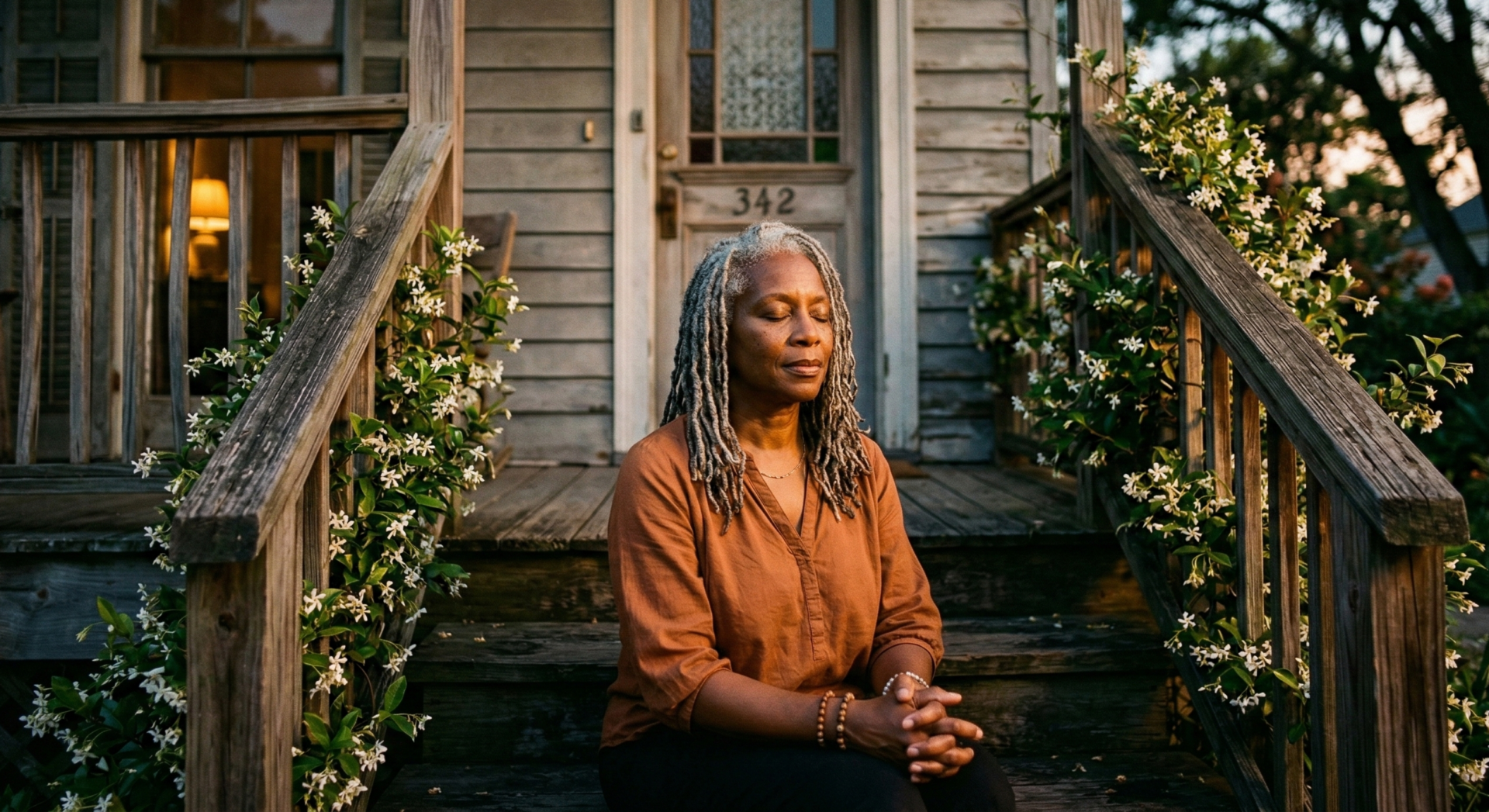
Yet something powerful is shifting. More Black women are choosing to step off the treadmill, not as defeat but as strategy. Rest is becoming the quiet rebellion that refuses to let grind culture define our worth. It is the moment we close the laptop, silence the notifications, and remember that our value was never tied to how much we produce. This is where the revolution begins, in the deliberate, unapologetic act of pausing. Because when Black women rest, we do more than recharge. We rewrite the rules.
Culture, business, and everything in between — delivered straight to you. Join the BFA Collective Newsletter.
The Superwoman Schema That Steals Our Sleep
We grew up hearing it. Be strong. Be the rock. Handle it. That message did not come from nowhere. It was forged in the fires of history where Black women had no choice but to endure. But today that same expectation shows up as the reason so many of us lie awake at night replaying conversations, planning tomorrow’s battles, and wondering why our bodies feel twenty years older than our age. Research ties the obligation to help others and the pressure to suppress emotions directly to poorer sleep quality among Black women. We carry the mental load for our households, our workplaces, and our communities, then wonder why rest feels like a luxury we cannot afford.
The Historical Roots of Our Exhaustion
Long before corporate burnout had a name, Black women’s labor built this country without compensation or care. In 1881, the Atlanta Washing Society, a group of Black laundresses, organized one of the earliest and most effective strikes in U.S. history. They shut down the city’s laundry services until they won higher pay and better conditions. Their demand was simple: recognition that their bodies needed recovery too. That same spirit lives in every Black woman today who realizes the grind is not new, it has just been rebranded as ambition. Capitalism and white supremacy have always counted on our refusal to stop. Denying rest was never accidental. It was design.
Tricia Hersey and the Nap Ministry Revolution
Enter Tricia Hersey, the Nap Bishop. In 2016 she founded the Nap Ministry in Atlanta, turning the simple act of lying down into a full-blown movement. Her 2022 book Rest Is Resistance: A Manifesto laid it out plain. Rest disrupts white supremacy and capitalism because it says our bodies are not machines. Hersey’s four tenets are now scripture for a growing number of us: rest is resistance, our bodies are not machines, naps are portals to imagine new worlds, and our dream space has been stolen, we want it back. She did not invent the idea. She gave it language and permission at the exact moment we needed it most.
Audre Lorde’s Enduring Blueprint
Decades earlier, Audre Lorde wrote the words we still quote when the exhaustion hits hardest. In her 1988 collection A Burst of Light, while fighting cancer, she declared that caring for herself was not self-indulgence but self-preservation, and that was an act of political warfare. Lorde was not talking about bubble baths and face masks. She was talking about the radical choice to stay alive and whole in a world that profits from our depletion. Her words remain the north star for every Black woman learning that boundaries are not selfish. They are necessary.
Reclaiming Rest in Daily Life
Rest does not require a week at a luxury resort or a big announcement. It starts small and sacred. It looks like saying no to the extra project without explanation. It looks like turning your phone face down after 9 p.m. It looks like napping in your car between shifts if that is what you have. It looks like community rest circles where sisters gather to simply be, no agenda, no performance. The women doing this work report clearer thinking, stronger boundaries, and deeper joy. They are not doing less. They are doing better.
What does rest as resistance mean for Black women today?
It means understanding that slowing down is not quitting the fight. It is refusing to let the fight destroy you. Tricia Hersey’s framework shows us how every nap pushes back against systems that need us tired and compliant. Read more in our deep dive on modern Black wellness movements.

How can Black women practice rest without guilt?
Start by naming the guilt as inherited, not personal. Create micro rituals, a ten-minute breath break, a Sunday with no plans, a text that simply says I am resting today. The guilt fades when the results show up in your health and your happiness. Explore our guide to guilt-free boundaries.
Why do Black women in leadership experience burnout at higher rates?
Because we are often the only ones in the room, carrying the weight of representation plus the invisible labor of code-switching and mentoring. McKinsey’s 2025 data showed eight in ten of us feeling it. The solution is not working harder. It is demanding environments that value our full humanity. Check our profile on Black women reshaping corporate culture.
What historical moments show Black women choosing rest as power?
The 1881 Atlanta Washing Society strike proved that collective pause could force change. Lorde’s cancer-era writings and Hersey’s Nap Ministry continue that lineage. History teaches us that rest has always been a strategy, not a weakness. See our feature on unsung Black women organizers.
Rest is not the absence of work. It is the presence of wisdom. When Black women choose rest, we model for our daughters, our communities, and the world that our lives were never meant to be spent in perpetual exhaustion. We reclaim time, health, creativity, and joy. We show that true power looks like a woman who knows when to rise and when to lay down. That choice is not soft. It is revolutionary.
Don’t miss the next deep dive. Join the BFA Collective today.
Reader’s Favorites:
- Empire-Building From Zero: The Resilience of the Self-Made Black Founder
- How to Fix Prickly Body Hair Without Expensive Laser Clinics
- Beyond the Talk: Nurturing Conscious Kids in an Unfiltered World
- The Black Laugh Is Not Just Funny; It Is Our Fortress
- More Than Just Brunch: Why Reclaiming Our “Third Place” is the Next Wellness Revolution