

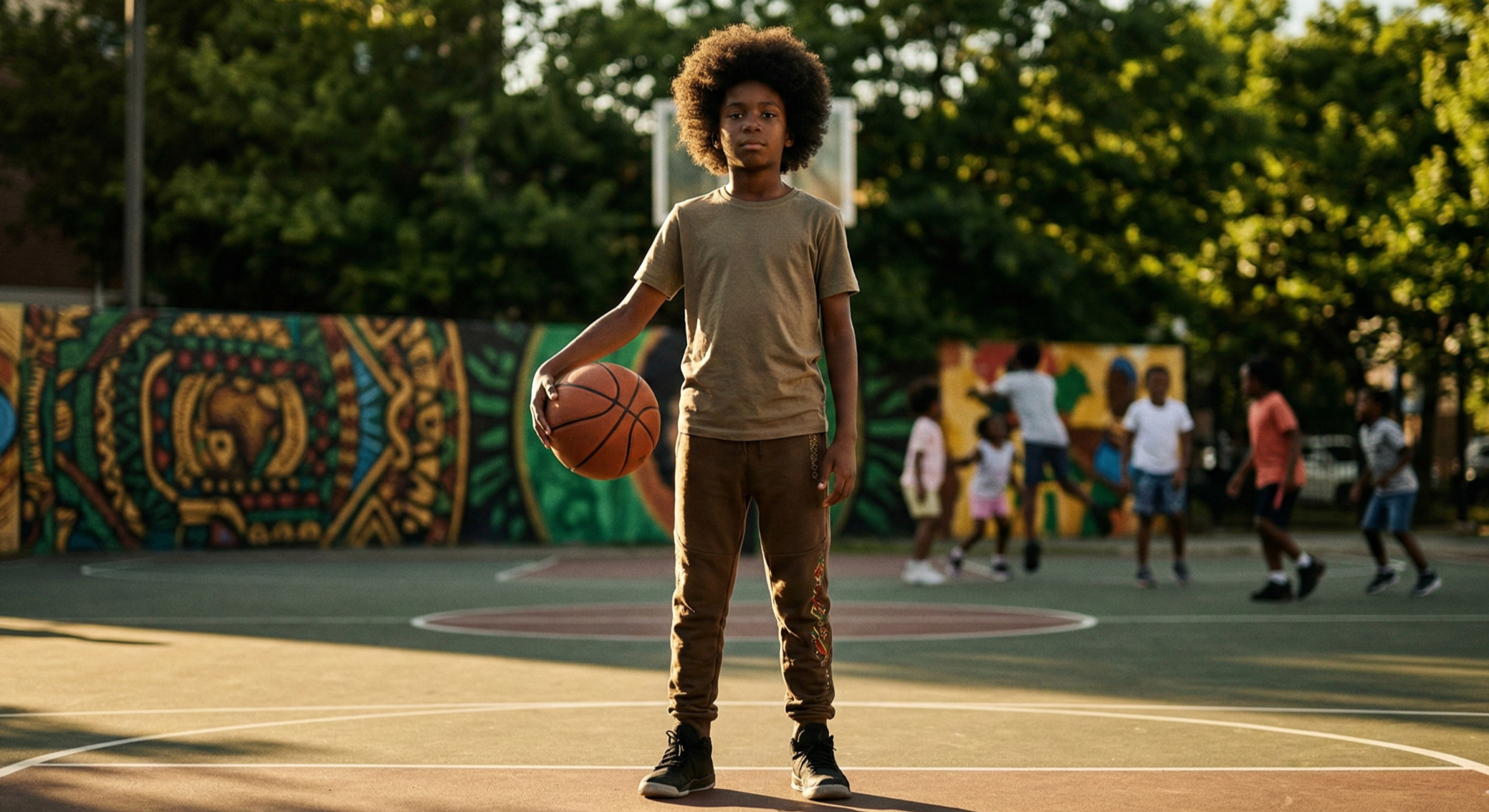
What if your son never had to dim his light, adjust his voice, or straighten his posture just to be seen as worthy? For too many Black boys, that question feels like a fantasy. From the playground to the classroom to the future boardroom, they learn early that their natural rhythm, the way they speak, move, laugh, or even sit, can be read as “too much,” “not enough,” or simply “threatening.” So they adapt. They code-switch. They split themselves in two to survive spaces that were never built for them. This doesn’t not always have to be the case. What if we could build a world where there way no reason to code switch at all?
But right now, in living rooms across Piperton and every corner of Black America, parents are refusing to pass that burden down. They are raising sons who can walk into any room as their full, unfiltered selves, loud laughs, natural hair, cultural cadence, and all. These families understand the stakes. A 2019 Pew Research Center study found that 48 percent of Black college graduates under 50 feel pressured to change how they speak around people of other races. Fast-forward to 2024, and an Indeed survey showed nearly four in ten Black workers believe stopping the habit would hurt their careers, while one in five said it already damages their mental health through constant emotional exhaustion. How else are we being impacted in ways wwe can’t even measure?
This is not abstract theory. Code-switching drains the very joy and creativity that make our boys brilliant. It teaches them that authenticity is a liability instead of their greatest asset. And when that lesson sinks in young, it shapes everything, from how they show up in school to how they dream about their futures. The agitation is real: our sons are carrying invisible weight that no child should bear. Yet the shift is happening. Parents grounded in cultural pride are choosing a different path, one where home becomes the place where their boys can exhale, where Blackness is not something to manage but something to celebrate. This is where the answer lives: practical, unapologetic ways to raise Black boys who never learn they have to perform for acceptance.
Culture, business, and everything in between — delivered straight to you. Join the BFA Collective Newsletter.
The Real Toll Code-Switching Takes on Our Boys
Code-switching is more than switching from AAVE to standard English. It is the constant mental calculus of “Will they take me seriously if I sound like home?” For Black boys, it starts as early as kindergarten. A 2021 study published in the Journal of Experimental Social Psychology showed that people, both Black and white, perceive Black individuals who code-switch as more professional. The message lands hard: your natural self needs editing.
The cost shows up in stress levels that follow them into adulthood. Researchers like McCluney and colleagues have documented how the emotional labor of managing identity leads to burnout before many even enter the workforce. Our boys internalize it as “I have to earn the right to be me,” and that chips away at confidence, creativity, and mental health. When they spend energy performing instead of learning, dreaming, or simply being kids, we lose pieces of who they could become.
Creating Homes Where Authenticity Thrives
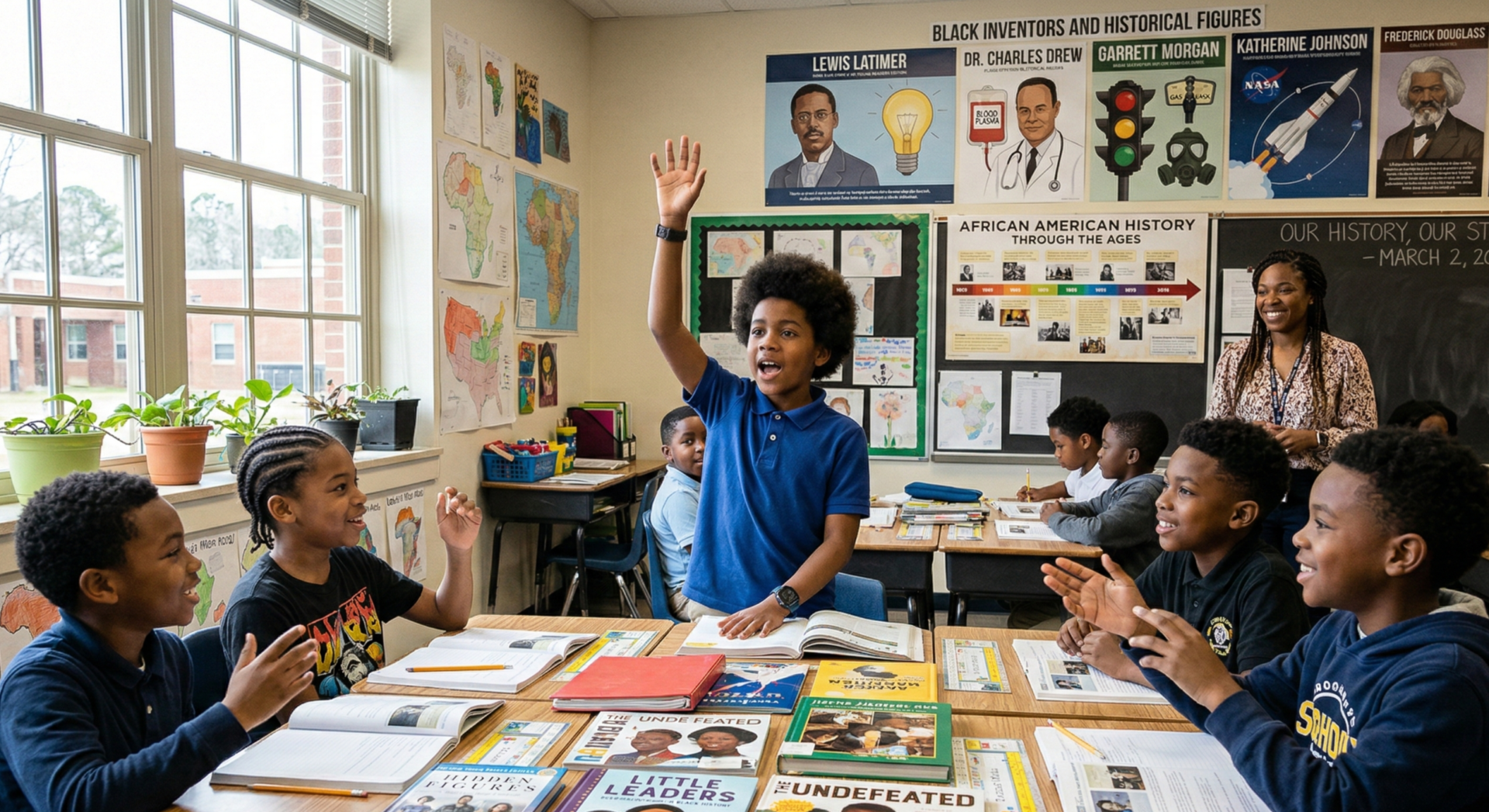
The foundation starts at the kitchen table. Parents who succeed here make home the safest space for full expression. They celebrate the cadence of Black language instead of correcting it as “wrong.” They stock bookshelves with stories of Black kings, inventors, and everyday heroes. They let boys wear their hair however it grows and dress in styles that feel right to them.
Dr. Jawanza Kunjufu laid this blueprint out clearly in his 2007 book Raising Black Boys, with over 100 practical tips for shielding sons from negative peer pressure and pop culture while building unbreakable self-worth. These families talk openly about race without fear. They affirm “Your voice is powerful exactly as it is.” They model unapologetic Blackness in their own lives—whether that means debating politics with passion at Sunday dinner or blasting classic hip-hop while cooking. When home feels like freedom, boys carry that confidence everywhere.
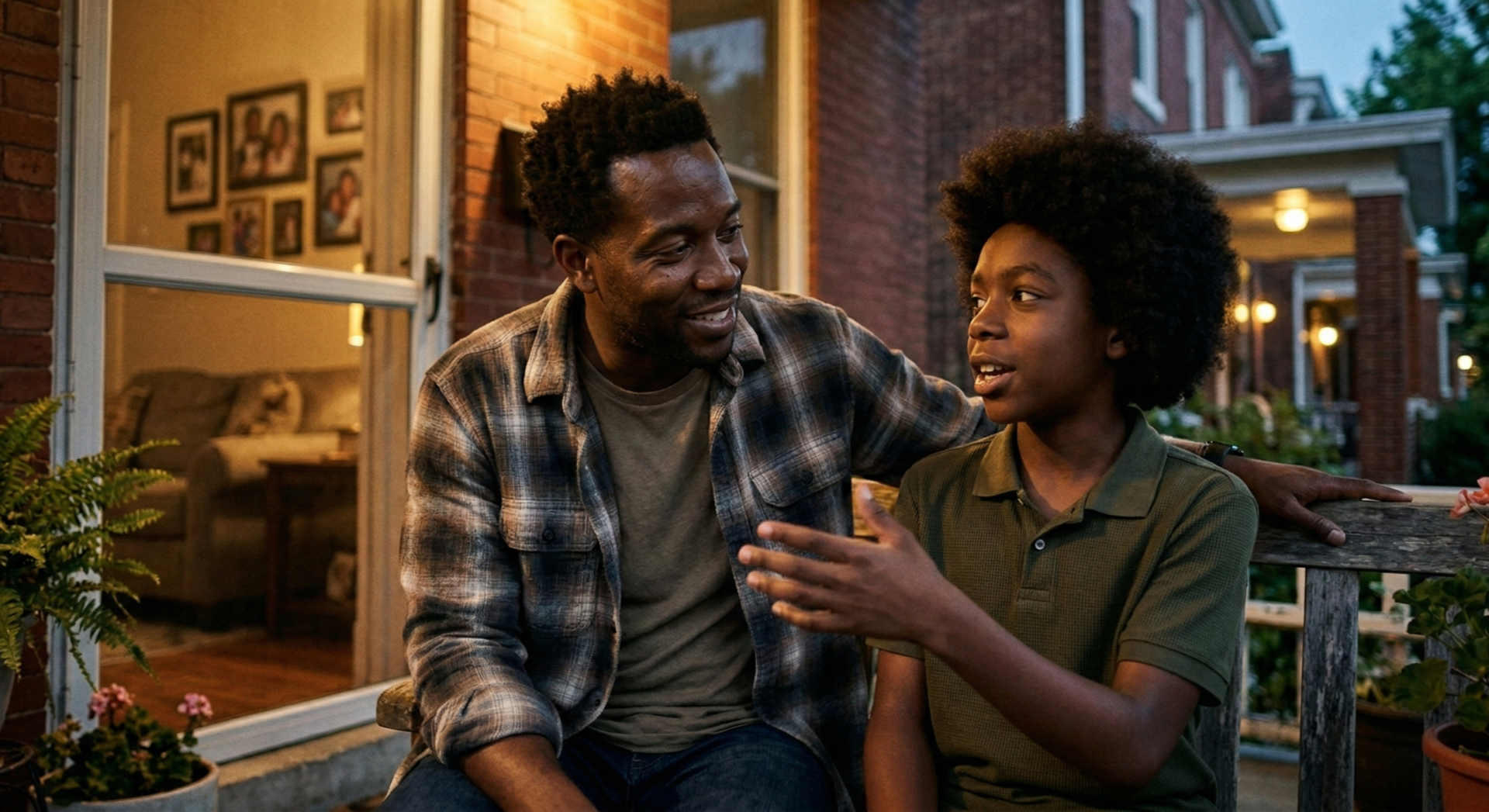
Navigating Schools and External Spaces Without Compromise
Outside the front door, the world still tests them. The key is preparation without panic. Parents teach their sons the game exists, but they do not have to play by shrinking themselves. They role-play scenarios, “What do you say if a teacher questions your tone?”, then remind them their worth is not up for debate.
They choose schools or supplement with programs that value cultural expression. They partner with teachers who see brilliance in dialect and energy, not just compliance. And when bias shows up, they advocate fiercely while teaching their sons that one ignorant adult does not define their future. The goal is not to make the world softer but to make our boys unshakable in who they are.
The Power of Community and Positive Male Role Models
No parent raises a son in isolation. Strong Black men who move through the world authentically become living proof that success does not require erasure. Whether it is uncles, coaches, mentors from the barbershop, or community elders, these figures show boys that leadership can sound like them, look like them, and still command respect.
Programs rooted in cultural affirmation, after-school spoken-word circles, STEM camps that highlight Black innovators, or rites-of-passage groups, reinforce the message. Boys see peers thriving without masks and internalize that their full selves belong in every space they enter.
Teaching Them to Stand Firm in Their Identity
Ultimately, this work is about legacy. It is teaching boys that their culture is not a hurdle to overcome but a superpower to wield. They learn history that centers Black excellence. They practice articulating ideas in their own voice. They understand that true power comes from knowing exactly who you are and refusing to apologize for it.
The long game pays off in men who innovate without permission, lead without assimilation, and build wealth and community on their own terms.
What exactly is code-switching for Black boys?
It is the daily adjustment of speech, mannerisms, clothing, or even interests to fit into predominantly white or mainstream spaces. For boys, it often means softening natural expressiveness or avoiding topics that feel “too Black.” Our earlier piece on Black language and power in the workplace dives deeper.
How does code-switching affect mental health in young Black males?
Constant performance creates hidden stress, anxiety, and emotional exhaustion. The 2024 Indeed survey found one in five Black workers already feel the mental health hit, and the pattern begins in childhood when boys learn to monitor themselves instead of exploring freely. Read our analysis on racial trauma and boys’ mental wellness.
Can Black boys succeed professionally without code-switching?
Yes—when they are raised with unshakeable identity and supported by networks that value authenticity. History is full of trailblazers who succeeded by doubling down on who they are. Our profile on modern Black leaders redefining the boardroom shows the proof.
What role do fathers and male mentors play?
They provide the blueprint. Boys need to see grown Black men thriving without masks. Fathers and mentors who speak, dress, and lead as their full selves become the standard. Check our feature on Black fatherhood in the 2020s.
Raising Black boys who do not have to code-switch is not about ignoring reality—it is about refusing to let reality shrink their spirit. It is about handing them a future where their brilliance, joy, and cultural richness are the reasons doors open, not obstacles to overcome. When we do this work, we do not just free our sons. We free generations.
Don’t miss the next deep dive. Join the BFA Collective today.
Reader’s Favorites:
- Empire-Building From Zero: The Resilience of the Self-Made Black Founder
- How to Fix Prickly Body Hair Without Expensive Laser Clinics
- Beyond the Talk: Nurturing Conscious Kids in an Unfiltered World
- The Black Laugh Is Not Just Funny; It Is Our Fortress
- More Than Just Brunch: Why Reclaiming Our “Third Place” is the Next Wellness Revolution