

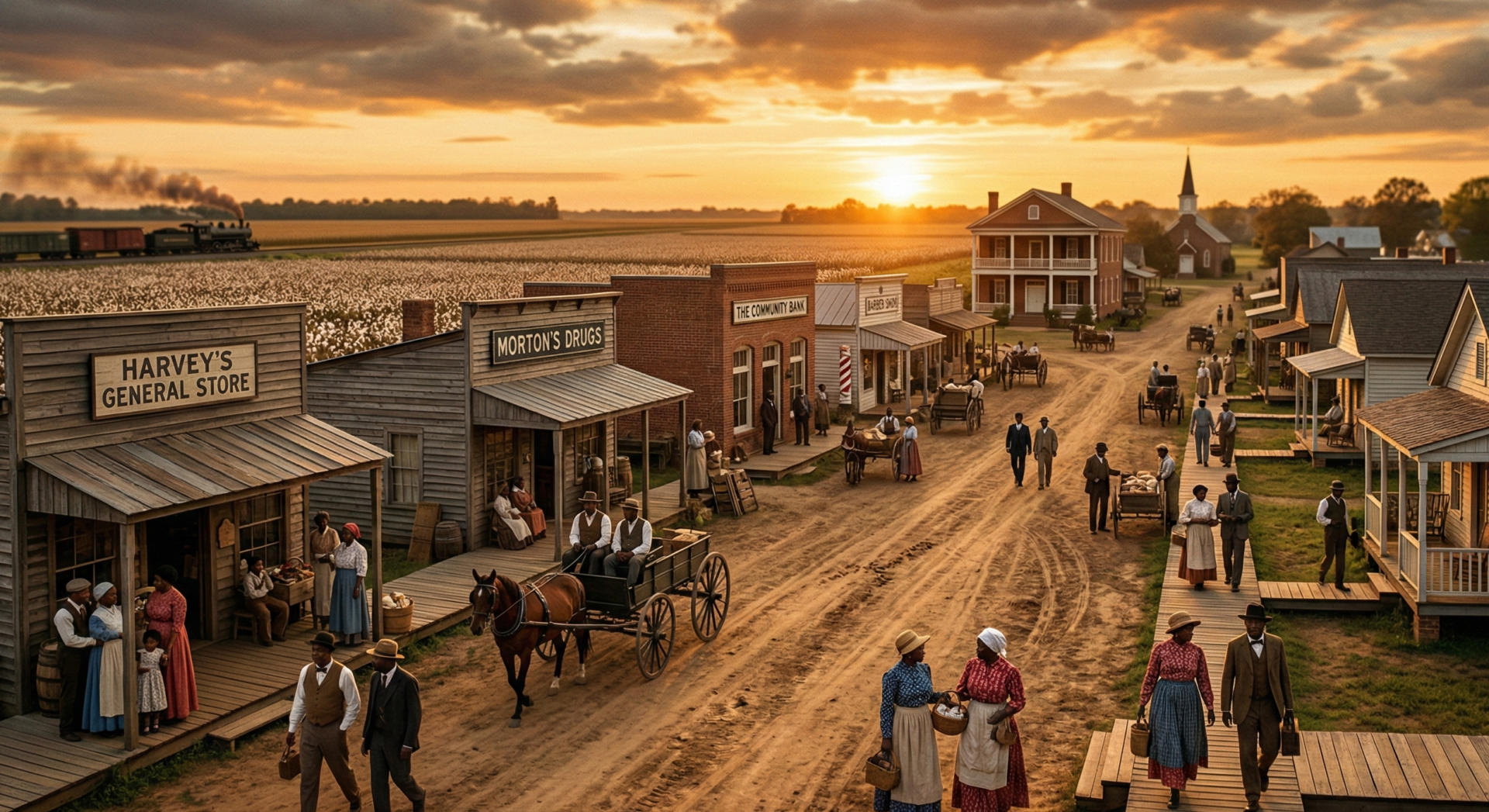
Picture this. It is 1907 in the Mississippi Delta. You step onto the platform in Mound Bayou and every face you see belongs to someone who looks like you. The mayor. The banker. The doctor running the hospital. The owner of the cotton gin. No one asks you to step off the sidewalk. No one demands proof of your right to be there. This is not fantasy. This is not Wakanda. This is one of dozens of all-Black towns that rose straight out of emancipation, places where freedom meant more than leaving the plantation. It meant owning the land, running the schools, printing the newspapers, and deciding your own future. Black resilience has been a throughline in American history. This is their story of rebellion, strength, and courage. It is the foundation of what Black America has been built on.
After 1865, the promise of real freedom quickly soured. Forty acres and a mule became sharecropping debt and night rides from the Klan. Jim Crow laws locked Black families into second-class lives across the South. Yet in that same moment, thousands of our people chose a different path. They pooled their wages, bought land by the hundreds of acres, wrote their own charters, and built entire towns from the ground up. Historians now count more than 1,200 Black settlements and over 50 incorporated towns created between the end of the Civil War and the early 1900s. In Oklahoma alone, more than 50 flourished at one time. These communities were not accidents of history. They were deliberate acts of genius.
Their success was undeniable. Low crime rates. High homeownership. Schools that taught trades and pride. Banks that loaned to Black farmers when white ones would not. These towns proved that Black excellence did not need white approval to bloom. They proved it in the cotton fields of Mississippi, on the Kansas prairie, in the piney woods of Florida, and along the railroads of Oklahoma. And yet most Americans have never heard their names. That erasure is not random. It is part of the same system that burned Greenwood in Tulsa in 1921 and flooded entire Black communities to make lakes.
This is where the real story lives. Not in the ruins, but in the blueprints our ancestors left behind. Blueprints that ambitious Black entrepreneurs, families, and dreamers can still use today.
Culture, business, and everything in between — delivered straight to you. Join the BFA Collective Newsletter.
The Great Exodus: Claiming Land and Liberty
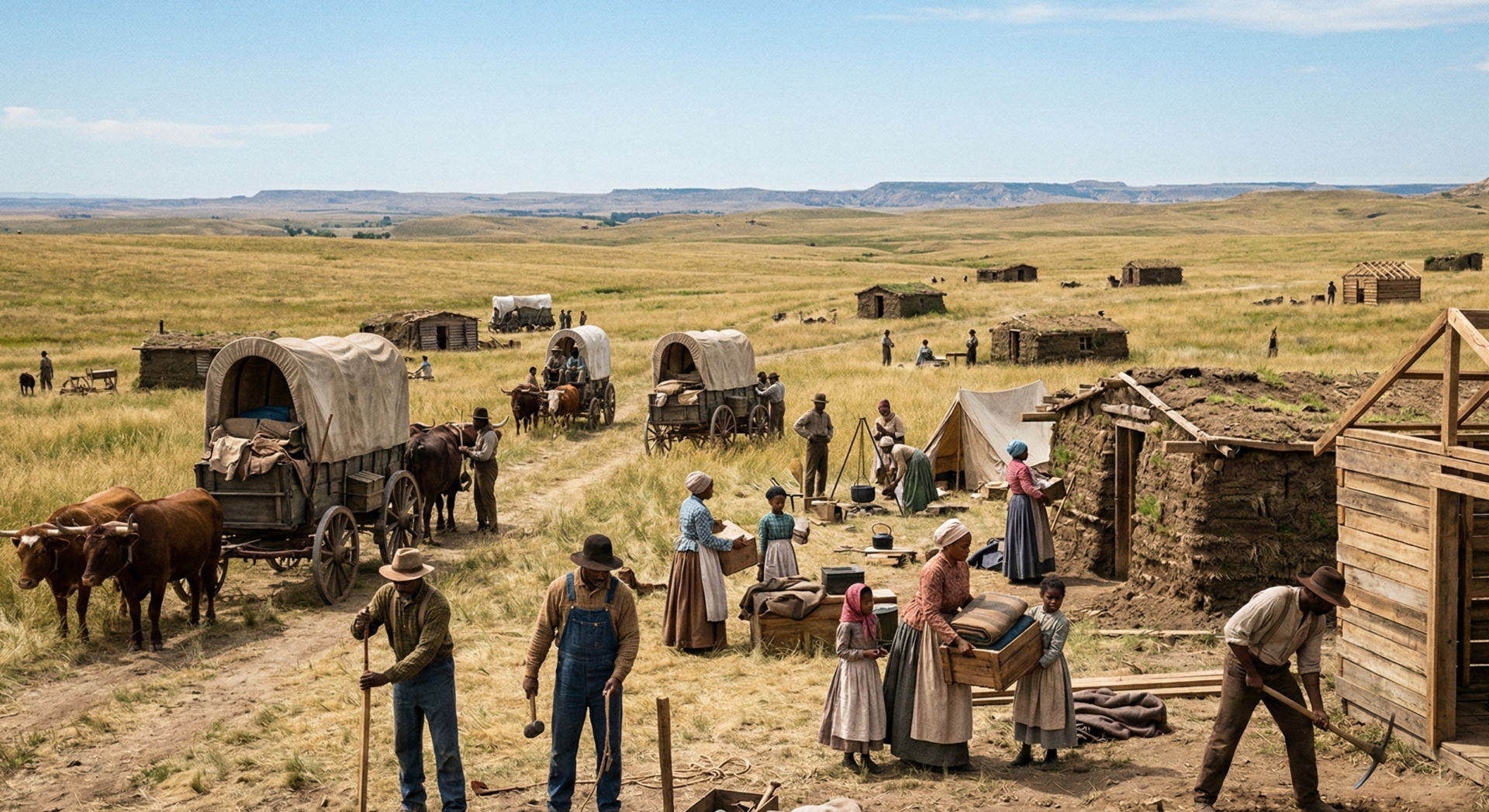
Right after emancipation, the urge to own something real sent thousands north and west. The Exodusters, as they were called, left the South in waves during the late 1870s. One of the first stops was Nicodemus, Kansas. Founded in 1877 by settlers mostly from Kentucky, the town started with dugout homes carved into the prairie. By the 1880s it had frame houses, two newspapers, three general stores, churches, and a baseball team. Residents voted in county elections and sent the first Black politicians to state office in the region. The railroad never came as promised, and droughts hit hard, yet Nicodemus never died. Descendants still return every summer for the Homecoming Emancipation Celebration that has run since 1878. Today it is a National Historic Site and the only remaining historic Black settlement west of the Mississippi that still feels like home.
Mound Bayou: The Jewel of the Delta
No town captured the dream better than Mound Bayou, Mississippi. In the spring of 1887, Isaiah Montgomery, a former slave from the Davis Bend plantation, led twelve pioneers to 840 acres purchased along the new railroad line. They cleared the land themselves. By 1911 the population reached 8,000. The town boasted six churches, several schools including the Mound Bayou Normal and Industrial Institute, a U.S. Post Office, multiple banks, and an oil mill. Cotton, timber, and corn fed the economy. Booker T. Washington visited and praised the community as a model of self-help. Crime stayed low. Alcohol and gambling were banned. Every resident had to contribute. Mound Bayou showed the world what Black people could do when left to govern themselves.
Eatonville and Hobson City: Southern Strongholds
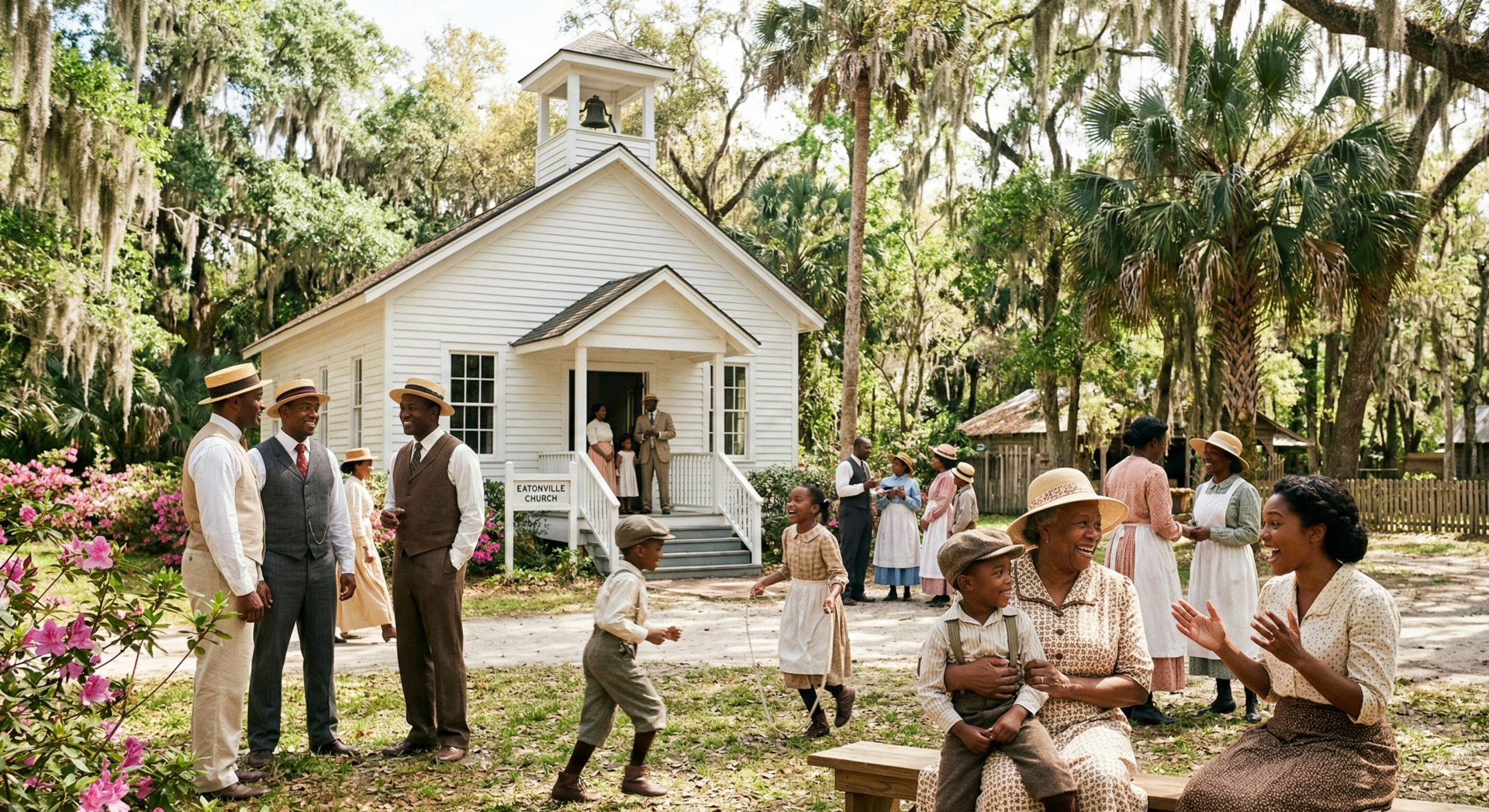
Down in Florida, another story unfolded in 1887. Twenty-seven Black men voted to incorporate Eatonville on 112 acres. It became the first all-Black incorporated municipality in the United States. Zora Neale Hurston grew up there, drawing on its churches, schools, and front-porch storytelling for her novels. The town built the Hungerford Normal and Industrial School with help from Tuskegee graduates and kept its independence for decades. In Alabama, Hobson City followed in 1899, becoming the first self-governing all-Black town in that state. It thrived as a stop on the Chitlin Circuit and still stands today with a proud majority-Black population.
Oklahoma’s Black Boom
Oklahoma offered the biggest explosion of possibility. More than 50 all-Black towns rose there between 1865 and 1920. Boley, founded in 1903 or 1904, grew fastest. By 1911 it had thousands of residents, an industrial school, banks, and thriving businesses. Booker T. Washington rode through in 1905 and declared Boley “the most enterprising Negro town in America.” Other towns like Langston, Rentiesville, and Clearview followed the same model: Black mayors, Black sheriffs, Black teachers, Black land. These communities turned the promise of freedom into daily reality on the western frontier.
Why the Silence and What Comes Next
Many of these towns faced sabotage. Falling cotton prices, the Great Migration to Northern cities, and outright violence took their toll. Yet the ones that survived, like Nicodemus, Eatonville, and Mound Bayou, still carry the DNA of self-determination. Today, when Black land ownership hovers near one percent of U.S. farmland and wealth gaps persist, these stories hit different. They remind us that our ancestors did not beg for inclusion. They built their own tables.
These towns matter because they prove Black prosperity has never been impossible. It has always been intentional. Their legacy lives in every Black-owned business, every land trust, every community garden, and every young person who refuses to wait for permission. We do not honor them by looking back in sadness. We honor them by building forward with the same fire.
Related Questions: Why did Black people create all-Black towns after slavery?
They needed safety, economic control, and the chance to raise families without constant terror. Sharecropping kept most trapped in debt, so visionaries bought land and governed themselves to create real independence. See our deep dive on Black land ownership through the decades.
What made towns like Mound Bayou so successful at first?
Strong leadership, railroad access, cooperative economics, and a clear vision of self-help. Isaiah Montgomery’s planning turned raw Delta land into a thriving hub with banks, schools, and businesses that served only Black customers on equal terms. Read our profile on Booker T. Washington and the towns he championed.
Are any historic Black towns still thriving today?
Yes. Eatonville, Florida, celebrates its heritage with festivals. Nicodemus, Kansas, holds its annual Homecoming. Mound Bayou and Hobson City remain majority-Black communities preserving their story. Explore our piece on modern Black towns keeping the dream alive.
How does Greenwood’s Black Wall Street connect to these earlier towns?
Tulsa’s Greenwood District was the largest and wealthiest of the later wave, but it followed the same blueprint of Black banks, doctors, lawyers, and entrepreneurs. The 1921 massacre shows what happened when that success threatened white supremacy. Our full report covers the Tulsa Race Massacre and its lasting impact.
These towns were never anomalies. They were the natural flowering of Black genius once the chains came off. They show us what is possible when we own the dirt, run the institutions, and tell our own stories. In a world still debating our right to thrive, their example feels more urgent than ever. The blueprint is right there in the soil they turned with their own hands.
Don’t miss the next deep dive. Join the BFA Collective today.
Reader’s Favorites:
- Empire-Building From Zero: The Resilience of the Self-Made Black Founder
- How to Fix Prickly Body Hair Without Expensive Laser Clinics
- Beyond the Talk: Nurturing Conscious Kids in an Unfiltered World
- The Black Laugh Is Not Just Funny; It Is Our Fortress
- More Than Just Brunch: Why Reclaiming Our “Third Place” is the Next Wellness Revolution