

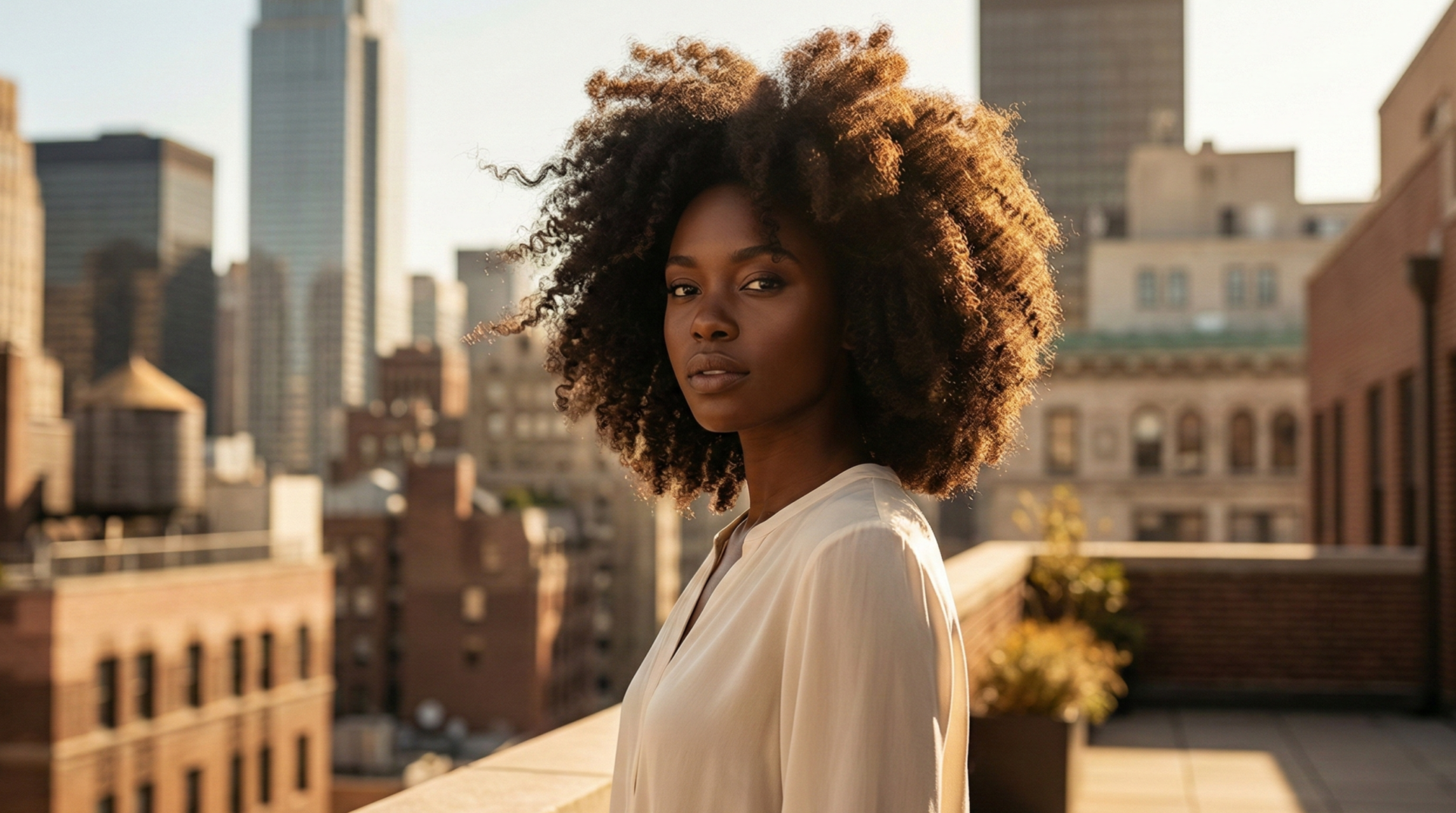
I still remember the burn. Not the chemical kind from the relaxer, though that came later. The real burn was the question my aunt asked when I was nine, standing in front of the bathroom mirror in our Dallas apartment while she pressed my edges for church. I already know what she was going to say before she said it….
“Why you always fighting it, baby? Just let it be pretty.”
Pretty meant straight. Straight meant acceptable. And acceptable meant I could walk into school, into stores, into rooms without the silent audit that so many Black girls learn before we learn long division. That moment planted the seed: my hair was a problem to solve, not a part of me to celebrate. My middle school-aged niece had to learn the same lessons growing up in a predominantly white neighborhood. For Black girls, wearing our hair naturally as it comes out of our scalps is a sign of rebellion.
Fast-forward to 2026 and the conversation has changed on the surface, but the tension remains. Black women still report changing their hair for job interviews at rates that should shock us. Studies from Dove continue to show that two out of every three Black girls in majority-white schools experience hair discrimination before they turn ten. Meanwhile the global Black hair care market sits comfortably above eight billion dollars and keeps climbing. We spend that money chasing products, styles, and validation, yet the core question lingers: who am I when no one is telling my hair how to behave?
This is not another natural-hair tutorial. This is what my own coils, twists, locs, and fro taught me about claiming space in a world that still tries to shrink us.
Culture, business, and everything in between — delivered straight to you. Join the BFA Collective Newsletter.
The Early Lessons in Conformity
By middle school I had mastered the Sunday-night ritual. Hot comb on the stove, grease that smelled like burnt sugar, the sizzle that promised straightness. Teachers praised my “neat” ponytail. Boys noticed me when my hair swung instead of coiled. I learned early that my natural texture carried a penalty.
The data backs the feeling. Research consistently shows Black women’s hair is 2.5 times more likely to be viewed as unprofessional. In majority-white environments that number climbs even higher. I carried that weight into every group project, every debate club meeting, every family photo where someone inevitably said, “Smile bigger, your hair looks good today.”
The Big Chop That Reset Everything
In 2015 I stood in a South Dallas salon with clippers in my hand and tears in my eyes. Six inches of relaxed ends hit the floor. The stylist asked twice if I was sure. I was not. But I was tired of the lie.
The first month was brutal. My hair shrank up like it had been waiting for permission. Coworkers at my entry-level marketing job gave the polite “It suits you” smile that really meant “What did you do?” Friends asked if I was going through something. I was, but not what they thought. I was finally going toward myself.
That chop stripped away the armor. Without length to hide behind, I had to meet my reflection every single day and decide she was enough.
Hair as Quiet Resistance
When California passed the CROWN Act in July 2019, I cried in my car. For the first time, a state said my braids, my locs, my twists were not violations of “professionalism.” Today more than twenty-five states have followed. Progress, yes. But the fact that we needed laws to protect our hair says everything about how deeply identity is policed through texture.
I think about the 1960s and 1970s, when Afros became helmets of Black Power. Angela Davis, the Black Panthers, even the models in Ebony magazine rocking the “natural look.” My grandmother still has the 1968 issue where they declared the Afro “a statement of pride.” That history lives in every protective style I wear now.
The Business of Belonging
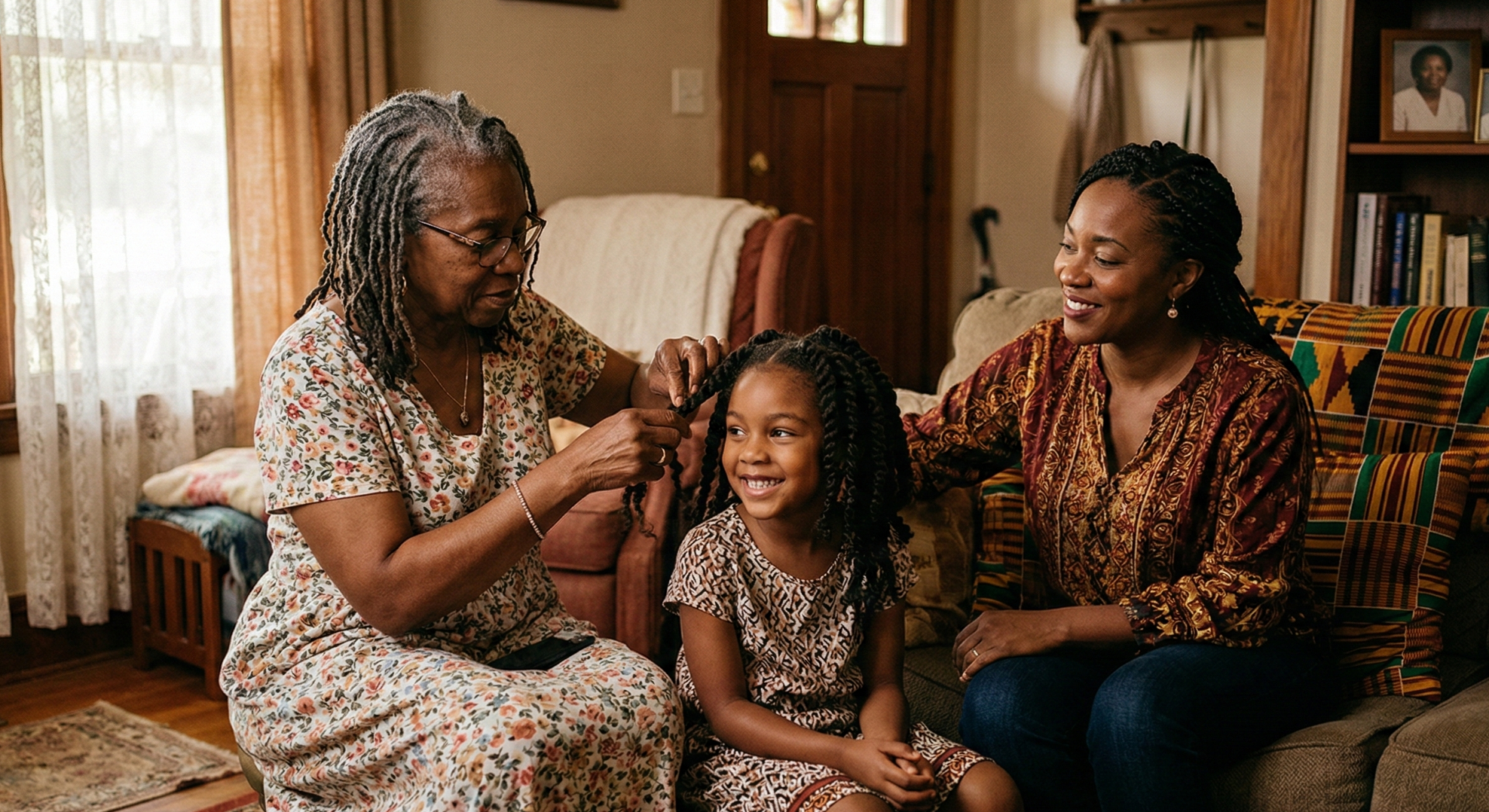
Once I embraced my hair, opportunities shifted. I started a small side hustle selling shea-butter blends to women in my apartment complex. Three years later that hustle supports my full-time content work and a team of two other Black women who style hair on weekends. The market rewards us when we stop apologizing for it.
Yet the real win is not the revenue. It is watching clients walk out of our pop-up events with their crowns high and their shoulders back. Hair taught me that identity is not just personal. It is communal capital.
Daily Rituals That Anchor Me
Every Sunday I sit on my bathroom floor with a wide-tooth comb, deep conditioner, and whatever playlist feels like home. Two hours of detangling, twisting, and talking to myself. This is therapy. This is prayer. This is the place where I remember I come from people who survived ships, cotton fields, and relaxer burns. My hair carries all of it.
Why This Still Matters Today
Black hair is never just hair. It is memory, resistance, joy, and commerce all braided into one. In a world still quick to judge our crowns before our qualifications, choosing to wear our hair as it grows is an act of daily reclamation.
My coils did not give me identity. They revealed it. They taught me that the parts of me society once called “difficult” are actually the parts that make me unstoppable.
Culture, business, and everything in between — delivered straight to you. Join the BFA Collective Newsletter.
What does Black hair symbolize in cultural identity?
It symbolizes resilience, creativity, and unapologetic Blackness, from the 1960s Afro to today’s locs and braids. Read our deep dive: The Enduring Power of the Afro in Black History.
How has the natural hair movement changed since the 2010s?
From YouTube big-chop videos to billion-dollar clean-beauty brands, the movement now centers health, entrepreneurship, and legislation. See our timeline: From Big Chop to Big Business.
Does hair discrimination still happen in the workplace?
Yes. One in four Black women still believe they have lost opportunities because of their hair, even with CROWN Act protections in over twenty-five states. Explore more: The Hidden Cost of Code-Switching at Work.

How do I start embracing my natural Black hair journey?
Start small: one protective style, one honest mirror moment, one product that actually works for your texture. Our guide helps: Your First Year Natural — What No One Tells You.
Black hair did not ask for permission to exist. Neither should we. It is time we treat every coil, every loc, every braid as the crown it has always been.
Don’t miss the next deep dive. Join the BFA Collective today.
Reader’s Favorites:
- Empire-Building From Zero: The Resilience of the Self-Made Black Founder
- How to Fix Prickly Body Hair Without Expensive Laser Clinics
- Beyond the Talk: Nurturing Conscious Kids in an Unfiltered World
- The Black Laugh Is Not Just Funny; It Is Our Fortress
- More Than Just Brunch: Why Reclaiming Our “Third Place” is the Next Wellness Revolution